
Japan’s Agency for Natural Resources and Energy (ANRE): An Overview
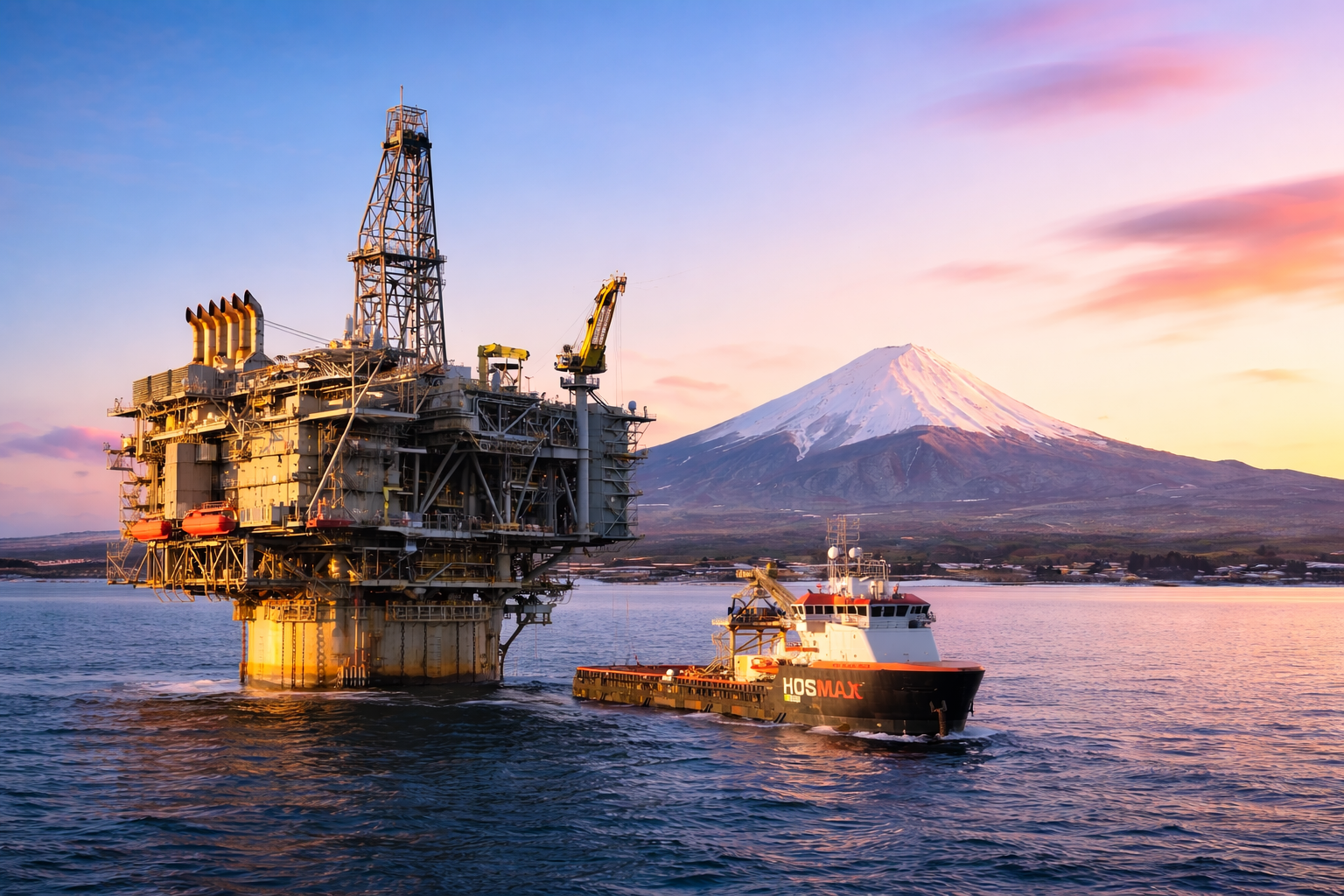
Offshore oil platform and supply vessel representing Japan’s external energy dependence and energy policy management
Key takeaways
The Agency for Natural Resources and Energy (ANRE) is an agency of the Ministry of Economy, Trade and Industry (METI) responsible for formulating energy policy, including deciding Japan’s energy mix and ensuring energy security.
ANRE was created in 1973 as a result of a merger of two other agencies inside the predecessor of METI.
The agency is led by ANRE veteran Yoshifumi Murase and is organized into a commissioner’s secretariat and three departments that are further split into divisions dedicated to specific policy areas.
ANRE has recently been brought into the limelight as the Japanese government agency directly responsible for dealing with the energy and economic fallout from the crisis in the Strait of Hormuz.
Given how vital energy is for modern nation states, most of the world’s governments have dedicated agencies (sometimes whole ministries) to deal with energy policy, such as the United States Department of Energy. In Japan, this role is fulfilled by the Agency for Natural Resources and Energy (ANRE), nestled inside the powerful Ministry of Economy, Trade and Industry (METI).
ANRE has a lot on its plate. Its responsibilities include drafting the all-important Strategic Energy Plan that formulates the direction of Japan’s mid-to-long-term energy policy and the nation’s energy mix. The agency is also in charge of securing a stable electricity supply (including the fuel and resources needed to produce it), promoting renewable energy, and laying out the regulatory framework for the national energy market, among other functions.
As the Iran War and the resulting chokehold at the Strait of Hormuz continue to cause worldwide disruptions in the global energy market, resource-poor Japan finds itself in a precarious position. Since ANRE is at the forefront of the nation’s response to the crisis, now is a great time to take an in-depth look at this crucial government agency.
When was ANRE created?
While predecessors of ANRE existed before, the agency in its current form was established on July 25, 1973 inside METI’s predecessor, the Ministry of International Trade and Industry. The new agency was the result of the merger of two agencies: the Bureau of Mines and Coal, and the Bureau of Public Utilities.
It’s worth pointing out that after the Japanese Central Government Reform plan carried out in 2001, ANRE was also responsible for nuclear and industrial safety administration. However, after the Fukushima nuclear accident, that department was abolished and its competencies transferred to the Industrial Safety Group inside METI and the newly-created Nuclear Regulation Authority of the Ministry of the Environment.
How is ANRE organized?
With a headcount of 429, ANRE is one of several component agencies of METI. Its offices are located inside the METI Annex Building in the Tokyo district of Kasumigaseki, the area where most government ministries and agencies are based.
At the top of ANRE sit the Commissioner and Deputy Commissioner, who oversee the agency’s three departments and a Commissioner’s Secretariat. Each department is headed by a Director-General and is further compartmentalized into a number of divisions dedicated to specific policy areas, plus a dedicated division for policy planning.
Commissioner’s Secretariat
Policy Planning and Coordination Division
International Affairs Division
Energy Efficiency and Renewable Energy Department
Policy Planning Division
Advanced Energy Systems and Structure Division
Energy Efficiency Division
New and Renewable Energy Division
Hydrogen and Ammonia Division
Natural Resources and Fuel Department
Policy Planning Division
Energy Resources Development Division
Fuel Supply Infrastructure Policy Division
Carbon Management Division
Electricity and Gas Industry Department
Policy Planning Division
Electricity Infrastructure Division
Nuclear Energy Policy Planning Division
Nuclear Facilities Development and Nuclear Fuel Cycle Industry Division
Radioactive Waste Management Policy Division
Who is the current Commissioner of ANRE?
Yoshifumi Murase has served as the Commissioner of ANRE since July 2023. He was previously posted to the Cabinet Office from 2020 as Director-General, where he oversaw policies such as the formulation of the Basic Policy on Economic and Fiscal Management and Reform and new economic measures under the Kishida administration.
Murase was born in Ehime Prefecture in 1967 and joined METI in 1990 as a new graduate of the University of Tokyo’s Faculty of Economics. He also earned a master’s degree in public administration from Harvard University. He would go on to hold a number of senior positions inside ANRE, including:
Director of the Policy Planning Division in the Electricity and Gas Industry Department
Director of the Policy Planning and Coordination Division in the Commissioner’s Secretariat
Director-General of the Electricity and Gas Industry Department
During his career at the agency, Murase had a variety of responsibilities and achievements, such as:
Spearheading initiatives for the reconstruction of Fukushima and for restarting nuclear power plants.
Supervising policies for securing final disposal sites for nuclear waste.
Overseeing reforms of the Tokyo Electric Power Company (TEPCO).
Drafting the Strategic Energy Plan.
Leading three rounds of regulatory reforms of the electricity and gas market, including full liberalization of new market entrants.
Designing new markets, including a non-fossil fuel energy value trading market and a capacity market.
What has ANRE been doing recently?
ANRE oversees all policy areas related to energy and resources. In recent years, the agency has been heavily promoting the wider adoption of renewable energy sources in order to achieve zero-emission goals, as well as energy saving measures to cope with Japan’s vulnerable position as a resource-poor country. As a result, ANRE seeks to secure stable supplies of energy resources and fuel, including oil, gas, and minerals.
This key mandate has brought the agency to the forefront of the government response to the Iran War and the disruption to the flow of oil through the Strait of Hormuz. On March 2, METI established the Iran Situation Energy Response Headquarters inside ANRE to deal with the crisis. The new office is part of the Policy Planning Division in the Natural Resources and Fuel Department, and it’s headed by Ryosei Akazawa, the Minister of Economy, Trade and Industry. In the group’s first meeting on the same day, Minister Akazawa instructed participants to work with a sense of urgency to assess the impact of the conflict on the nation’s energy supply, and to take the necessary measures as soon as possible.
One such measure was the release of oil from the nationally held strategic reserves in coordination with the International Energy Agency (IEA), which started on March 26.
Conclusion
Due to Japan’s predicament as a nation heavily dependent on imports to satisfy its energy demands, ANRE is a vital government agency for the nation. Besides recent shocks such as the ongoing Iran crisis, other short-term challenges include Prime Minister Takaichi’s less bullish reception towards renewable energy as compared to her predecessors and the renewed push for nuclear power (with all of the hurdles that come with nuclear restarts). Its long-term goal is to ultimately achieve energy security, which should keep the agency busy (and crucial) for decades to come.
Any new entrants in the energy space seeking to navigate the policy waters in Japan would do well to keep an eye on ANRE.
If you found this overview useful and want more regular insights into Japan’s politics and public policy, sign up to our mailing list and stay ahead of the developments shaping Japan’s future.
Frequently Asked Questions (FAQ)
Q: What is the difference between ANRE and METI?
A: ANRE is a component agency within the Ministry of Economy, Trade and Industry (METI). While METI oversees a broad portfolio that includes industrial policy, trade, and economic strategy, ANRE is specifically responsible for energy and natural resource policy. In practice, ANRE handles the technical design and implementation of energy policy, while METI provides overall political direction and coordination across sectors.
Q: Why is ANRE so important for Japan compared to other countries?
A: Japan is one of the world’s most resource-dependent advanced economies, importing the vast majority of its energy. This makes energy security a central policy concern. As the agency responsible for securing fuel supply, managing the energy mix, and coordinating crisis responses, ANRE plays a more structurally critical role in Japan than equivalent agencies do in more resource-rich countries.
Q: What role does ANRE play during an energy crisis?
A: During crises such as disruptions in the Strait of Hormuz, ANRE acts as the government’s central coordination body for energy policy. This includes assessing supply risks, coordinating with international partners such as the International Energy Agency, and implementing measures such as releasing strategic reserves. It also works across ministries and with private-sector energy companies to stabilize supply and manage economic impact.
Q: How much influence does the ANRE Commissioner have over policy?
A: The ANRE Commissioner plays a key role in shaping and executing energy policy, but operates within the broader political framework set by METI leadership and the cabinet. In practice, the position carries significant influence due to ANRE’s central role in drafting policy and managing implementation, especially during periods of energy market disruption.
Q: How does ANRE interact with the private energy sector in Japan?
A: ANRE plays a central role in shaping the regulatory and market framework within which energy companies operate. This includes designing electricity and gas market reforms, setting rules for grid access and pricing, and coordinating with utilities and trading firms during supply disruptions. As a result, major energy companies in Japan maintain close engagement with ANRE on both policy development and implementation.