
2025’s Top 10 Moments and Events in Japanese Politics
There is a commonly held belief that Japanese politics is “boring.” While it may be true that the country has been relatively politically stable, led by the same Liberal Democratic Party for almost 70 consecutive years (save for the brief usurpations in the 1990s and late 2000s), this year proved to be anything but boring. In this list, we highlight in chronological order what we believe were the most impactful moments and events in Japanese politics, from the rise of Myaku Myaku to the installation of new Prime Minister Sanae Takaichi.
1. The Reiwa Rice Crisis & Inflation
It was another year in which it was impossible to turn on the news and not hear about companies raising prices on household goods and items, with rice becoming the lightning rod of inflationary concerns. Domestically grown rice saw a jump in price due to a combination of previous years’ heatwaves affecting rice quality and government acreage reduction policies. Throughout the year, prices remained at high levels, and in December 2025, the average price of rice sold for 4,335 JPY per five kilograms, the highest since the Ministry of Agriculture, Forest, and Fisheries (MAFF) survey began in 2022. The scarcity led to panic buying and empty supermarket shelves, a phenomenon dubbed the “Reiwa Rice Crisis.” In response, the government released stockpiled rice, prompting long lines nationwide for cheaper, though older, rice (古米, 古古米, 古古古米: one-, two-, and three-year-old harvests, respectively). In May, Agriculture Minister Taku Eto was forced to resign after saying, “I’ve never bought rice. My supporters give me plenty, I have more than I can sell.” He was replaced by current Defense Minister Shinjiro Koizumi, who undertook swift but ultimately insufficient measures to drive down costs.
Although the Ishiba administration put forward a policy of increasing production, this was recalibrated under the Takachi administration, leaving policymakers grappling with how to strike a balance between prices consumers can afford and prices that allow farmers to continue production. Beyond rice, energy and raw material prices remain elevated, and food and daily necessities continue to trend upward while real wages (nominal pay adjusted for inflation) remained negative. The rising cost of a staple grain crystallized a broader feeling of economic stagnation within the country that people are looking toward the government to answer.
2. 2025 Osaka-Kansai Expo
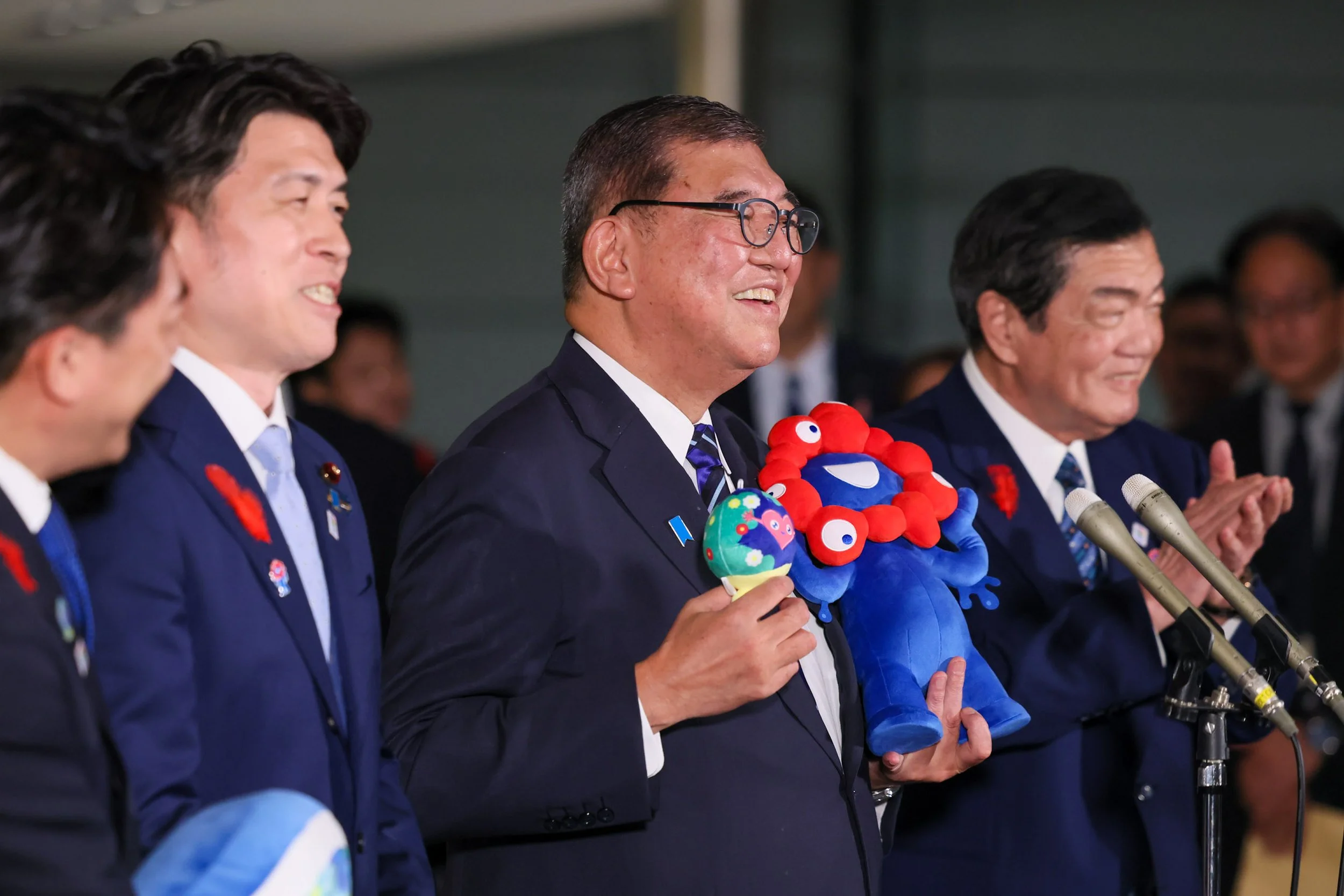
After a chaotic 2020 Tokyo Olympics that was delayed due to COVID, the Osaka-Kansai Expo opened in April this year amid skepticism and a list of controversies. Early issues ranged from methane gas leaks, fly infestations, Legionella bacteria in the water, seemingly never-ending lines, and unfinished pavilions. Surely, it was a project doomed to fail.
Despite the rocky start and accusations of wasted public spending (construction costs went past about 80% above original projections), the event ultimately turned a profit (projected 23-28 billion JPY). Attendance exceeded 25 million, surpassing the 2005 Aichi Expo with its mascot, the initially much maligned monster with the eyeball mane, Myaku Myaku, gaining a massive cult following. Within the country, this 184-day affair will likely be remembered as Japan’s official grand reopening to the international public after COVID.
3. “Overtourism”
From January to October, Japan welcomed over 35 million tourists and is likely to pass its 2024 record of 36.9 million tourists. 2025 was also the year in which the general Japanese populace became familiar with the term “overtourism,” a phenomenon afflicting the country’s most popular destinations of Tokyo, Kyoto, and Osaka. The phenomenon sparked public debate that split between blaming poorly behaved foreign visitors and criticizing inadequate management and infrastructure by national and local governments.
Both verified and unverified reports proliferated of tourists harassing geishas in Kyoto, taking inappropriate photos, and littering. Public transportation systems groaned under the strain, with overcrowded buses and trains to popular destinations. During her LDP leadership campaign, now-Prime Minister Sanae Takaichi, a Nara native, made headlines by claiming foreign tourists in her home prefecture were kicking the local deer and trying to frighten them by hitting them, saying, “If they come all the way from overseas to intentionally harm things that Japanese people cherish, something has gone too far.” Nara City officials stated they had received no formal reports of such deer-kicking incidents. Takaichi’s statement came to be a flashpoint in the overtourism discussion highlighting how the debate came to be about more than crowd management and etiquette, but to anxieties about foreign visitors more broadly, and how politicians leverage and inflame them for political clout.
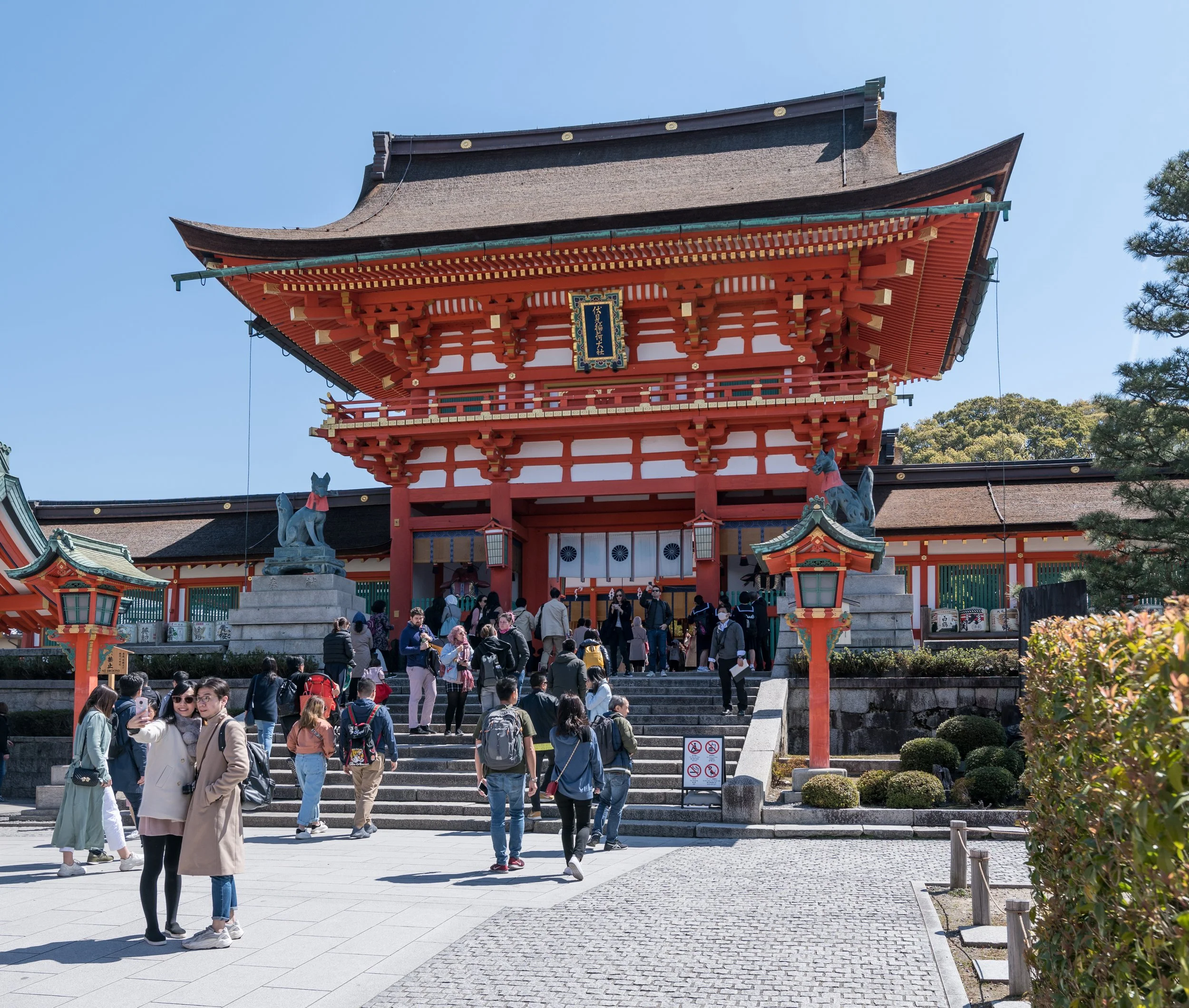
To combat overtourism, the government has since proposed tripling the existing departure tax, introduced in 2019 at 1,000 JPY per person, to 3,000 JPY which would generate approximately 120 billion JPY annually based on 40 million departures. The stated purpose was funding tourism infrastructure improvements, multilingual signage, transportation capacity expansion, and preservation of cultural sites damaged by overtourism, with implementation scheduled for fiscal year 2026 beginning in April.
4. AI Act Passed
AI was on the tips of every government’s tongue this year, and Japan was no different. While initially taking a European stance that was cautious toward artificial intelligence, Japan has since dramatically shifted toward becoming “the most AI-friendly nation in the world,” codified in its AI Act that was passed in April. Not wanting to be left behind in the global AI race, Japan has developed and released this AI policy framework designed to be a business-friendly and flexible governance path that emphasizes maximizing the positive societal impacts of AI and capitalizing on a risk-based and agile model. Government initiatives span foundation model development, high-quality dataset creation, AI-driven cybersecurity, and international standard-setting. Japan’s AI governance is tightly linked to its Society 5.0 vision that frames AI as essential infrastructure for economic growth, digital transformation (DX), and solving existential challenges such as population decline. The problem for the country is that it consistently lags behind the United States and China which are supported by large-scale investment and human capital.
Ever since the adoption of the AI Act, the government has released a flurry of initiatives that lay out the steps to reach its goal for a world-class AI environment.
Under Prime Minister Takaichi, the government has positioned AI as a key strategic sector, designating it, alongside semiconductors and quantum technologies, as a “crisis management investment” priority within Japan’s broader economic strategy.
The government also released a draft on the development and use of artificial intelligence, which sets targets to raise public generative AI adoption from roughly a quarter of people to 50%, and eventually 80%. In late December after the release of a draft Basic AI Plan, it was announced that the Ministry of Economy, Trade and Industry (METI) is expected to provide support worth around 1 trillion JPY to the private sector over a five-year period to help develop AI systems. With this stronger push into AI, we should expect in 2026 more state-led diffusion of “safe” AI rather than deregulation or frontier-model competition.
Read here for more on our analysis on AI in Japan.
5. Trade Deals
Newly reinstated US President Donald Trump began his second term in office with ambitious plans to dramatically change American trade policy. In April, he announced the imposition of high reciprocal tariffs on nearly all trading partners, seeking to reduce the trade deficit and reinvigorate domestic manufacturing. Along with fears of an economic slowdown, frequent policy reversals roiled financial markets and plunged the global economy into turmoil.
Things have since settled down. The tariff rate on Japan was lowered from an initial 24% to 15% following bilateral negotiations, which included Japan’s agreement to a 550 billion USD investment in the United States. A fact sheet released at the Japan-US summit in October listed four priority areas for this investment: energy, artificial intelligence infrastructure, critical minerals, and power generation for AI. Projects include the construction of small modular reactors and power infrastructure for data centers. While the tariffs caused heated moments, by the end of 2025, even Toyota CEO Akio Toyoda was donning MAGA merchandise as a showing of good faith US-Japan relations.

On June 13, President Donald Trump issued an order allowing Japan’s Nippon Steel to acquire US Steel Corporation, a deal the Biden administration had previously blocked. The agreement was reached on the condition that the companies enter into a national security agreement with the US government, including a “golden share” provision in US Steel. Nippon Steel said the deal would allow the company to increase profits, particularly in light of the tariffs on steel products imported from the United States.
With this acquisition, the company would become the world’s second-largest steelmaker after China’s state-owned China Baowu Group and strengthens its competitiveness in the global steel market and against the PRC. The Nippon Steel/US Steel deal illustrates the further intertwining of Japanese-American business relations in critical sectors, buttressed by the whopping 550 billion USD investment package.
6. Summer Upper House Election
Held in July 2025, this year’s election was a disaster for the ruling coalition. The LDP and Komeito lost their majority in the Upper House, securing only 47 seats (falling short of the 63 needed). This was the coalition's worst performance in decades and combined with their already weakened position in the Lower House after losing their supermajority, the government’s legislative capacity was severely compromised.
Meanwhile, other conservative parties fared slightly better. The nationalist party Sanseito won 14 seats (up from one). Their continued presence has been in part due to its successful digital campaign that ran aggressively on X, YouTube, and Instagram, creating viral content with simple and provocative “Japanese people first” messaging. The party targeted young voters disillusioned with traditional parties and other voters seeking “outsider” candidates. The other smaller conservative party, the Democratic Party for the People (DPFP), also won 17 seats with its appeal focusing on more bread-and-butter issues and positioning itself as an “outsider, but practical” option for working-age voters.
With a resounding electoral defeat, 2025 marked to be a bad year to be the LDP and a very bad year to be its president, Shigeru Ishiba.
7. Sanae Takaichi Becomes Prime Minister
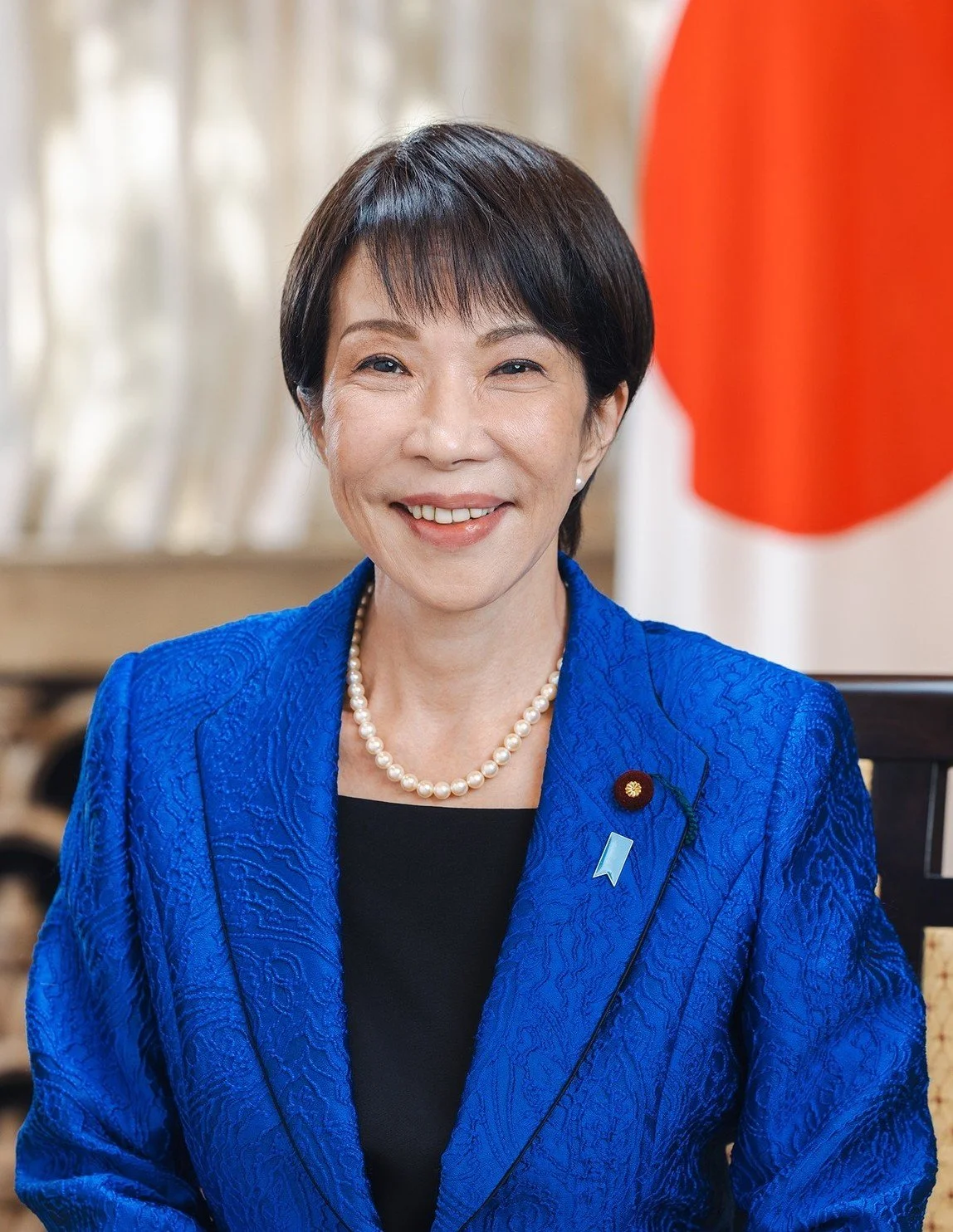
Prime Minister Ishiba, who took office in late 2024, bore responsibility for this year’s Upper House loss and resigned as LDP President in September 2025, triggering a party leadership election. Sanae Takaichi won the race, becoming the first female President of the LDP and subsequently the first female prime minister. Her victory was due in no small part to former Prime Minister Taro Aso’s behind-the-scenes work supplying the organizational votes and elite signaling needed for Takaichi to prevail. The Nara representative was able to transform from a popular figure among hardline conservatives into the consensus choice among enough Diet members to win, momentarily stabilize the party, and claim the premiership. Takaichi’s ascent offers a more ideologically defined banner that could consolidate conservatives and potentially put wind back in the LDP’s sails.
Upon winning the leadership, Takaichi declared, “I will abandon the idea of a work-life balance — I will work, work, work, work, and work,” which was selected as a 2025 term of the year. This led to some miscommunication in which many believed that this was a wish or demand upon the Japanese people to work even harder, an endorsement of Japan’s infamous corporate culture which has led to notable deaths of its workers (known as karoshi), as opposed to what she meant which was her personal work ethic. Reports emerged of Takaichi conducting ministerial meetings at 3:00 AM, showing her dedication to keeping this promise.
In stark contrast to the former “sleepy” Prime Minister Ishiba, recent public polling suggests that the PM has enjoyed strong favorability amongst the public, reinforcing the sense that her brand of intensity and discipline is resonating with a public hungry for decisiveness. Takaichi’s leadership is positioned as the strong leader many felt Japan needed and the effects of that persona spilled into popular culture. After her electoral win, a mini cultural movement in which supporters (particularly women) mimicked Takaichi’s fashion, known as “Sana-katsu” (a portmanteau of Sanae and katsu meaning “activity”) was born. The “Sana-katsu” trend involved buying her signature Hamano black bag and using her preferred pink Jetstream pen. Takaichi herself acknowledged the trend during a House of Representatives Budget Committee session on December 9, saying she would be very happy if it encouraged young people to take an interest in politics.
However, despite being the first female Prime Minister, Takaichi has faced criticism for appointing only two other women to her 19-member cabinet (Finance Minister Satsuki Katayama and Economic Security Minister Kimi Onoda). Critics noted that the gender balance she promised was virtually non-existent and worry about what this could potentially mean for gender equity initiatives in the country.
Takaichi opposes the use of dual surnames in a household, rejects calls to allow female members of the imperial household to become empresses, and is against legalizing same-sex marriage.
8. Komeito Exit Stage Right, Japan Innovation Party Enters Coalition
The October 2025 announcement that Komeito would end its coalition with the LDP sent shockwaves through Japanese politics, terminating a partnership that had mostly endured since 1999. Komeito, founded in 1964 by Buddhist organization Soka Gakkai and commanding approximately eight million members, had traditionally provided the LDP with reliable votes to reach a majority, powerful organizational ground game, moderation on security policy acting as a brake on LDP hawks, and political representation for the Buddhist community. The breaking point came from multiple irreconcilable conflicts with Prime Minister Takaichi's nationalist agenda and her visits to Yasukuni Shrine along with the LDP’s inability to properly address political funding scandals that continue to plague the party.
Into the vacuum stepped the Japan Innovation Party (JIP). A populist party founded in 2015 with roots in Osaka-based reform movements, the JIP shares the LDP’s support for constitutional revision, higher defense spending, and further economic deregulation. Intensive negotiations in the fall saw the JIP extract significant concessions including potential support for Osaka to become a special administrative region similar to Tokyo’s wards and policy input on education reform. However, we’ve already seen cracks in the coalition with the bill on cutting Lower House seats (a pet issue of the JIP’s) delayed until 2026. While the longevity of the coalition has yet to be proven, its formation has for now left the LDP on somewhat stable ground with a razor thin majority in the Lower House and ultimately reshaped the Diet’s dynamics.
9. Takaichi & Trump
In late October, President Trump visited Japan while en route to an ASEAN summit in Malaysia. While in Japan, Trump delivered remarks to American service members aboard the USS George Washington, an aircraft carrier docked at Yokosuka Naval Base near Tokyo. Before Trump spoke, Takaichi also participated and gave a speech, which is uncustomary for a Japanese political leader, especially on a nuclear-powered aircraft carrier. When Trump introduced her by saying, “This woman is a winner,” Takaichi raised her hand with a broad smile. The footage proceeded to go viral and became a symbol, both for supporters and critics, of her close alignment with Trump.

The moment drew comparisons to criticism directed at “Tariff Czar” Ryosei Akazawa, who visited Washington, DC more than ten times, prompting commentary that Japan was acting at the behest of the United States. Critics argued that the episode reinforced perceptions of Japan accepting unfavorable trade terms, particularly on agricultural imports and automobile exports.
10. Trouble Over Taiwan
In November, after Prime Minister Takaichi stated that a Chinese invasion of Taiwan would be a “survival-threatening situation for Japan,” in an ad-libbed moment, the Chinese Consul General in Osaka, Xue Jian, posted a violent message on X saying, “The filthy head that recklessly sticks itself in must be cut off without a moment’s hesitation.” In turn, China implemented countermeasures including a travel advisory warning citizens to “reconsider travel to Japan,” and discouraging Chinese students from studying in Japan. Japanese movie releases in China have also been postponed, while concerts and other entertainment tours have been called off.
The incident marks the most serious Japan-China diplomatic crisis since the 2012 Senkaku Islands confrontation and relations don’t appear to be improving with Takaichi, a known China hawk, refusing to retract her original comments while she still claims Japan is “open at all times to dialogue.”
Conclusion
With the tensions with China being the final major event of 2025, Japan is not ending the year on the best of notes. With inflation and a weak currency simultaneously hitting the pocketbooks of Japanese citizens, the real test for Takaichi and her government come 2026 will be to address these domestic economic issues while pursuing an agenda to strengthen the country’s position amid a more fragmented international environment.
If you found this overview useful and want more regular insights into Japan’s politics and public policy, sign up to our mailing list and stay ahead of the developments shaping Japan’s future.
Photo Credits
Send-off of Myaku-Myaku
By Cabinet Secretariat, CC BY 4.0, https://commons.wikimedia.org/w/index.php?curid=177133186
Romon, Fushimi Inari-taisha, Kyoto, West view
By DXR - Own work, CC BY-SA 4.0, https://commons.wikimedia.org/w/index.php?curid=78715901
Trump showing a chart with reciprocal tariffs
By The White House - https://www.flickr.com/photos/whitehouse/54427036491/, Public Domain, https://commons.wikimedia.org/w/index.php?curid=163115900
Official portrait of Sanae Takaichi, Prime Minister of Japan
By 外務省 (MOFA), CC BY 4.0, https://commons.wikimedia.org/w/index.php?curid=179115440
Sanae Takaichi and Donald Trump at Yokosuka Naval Base in 2025
By Cabinet Secretariat, CC BY 4.0, https://commons.wikimedia.org/w/index.php?curid=177531032