
What is the LDP’s regional party structure?
Key takeaways
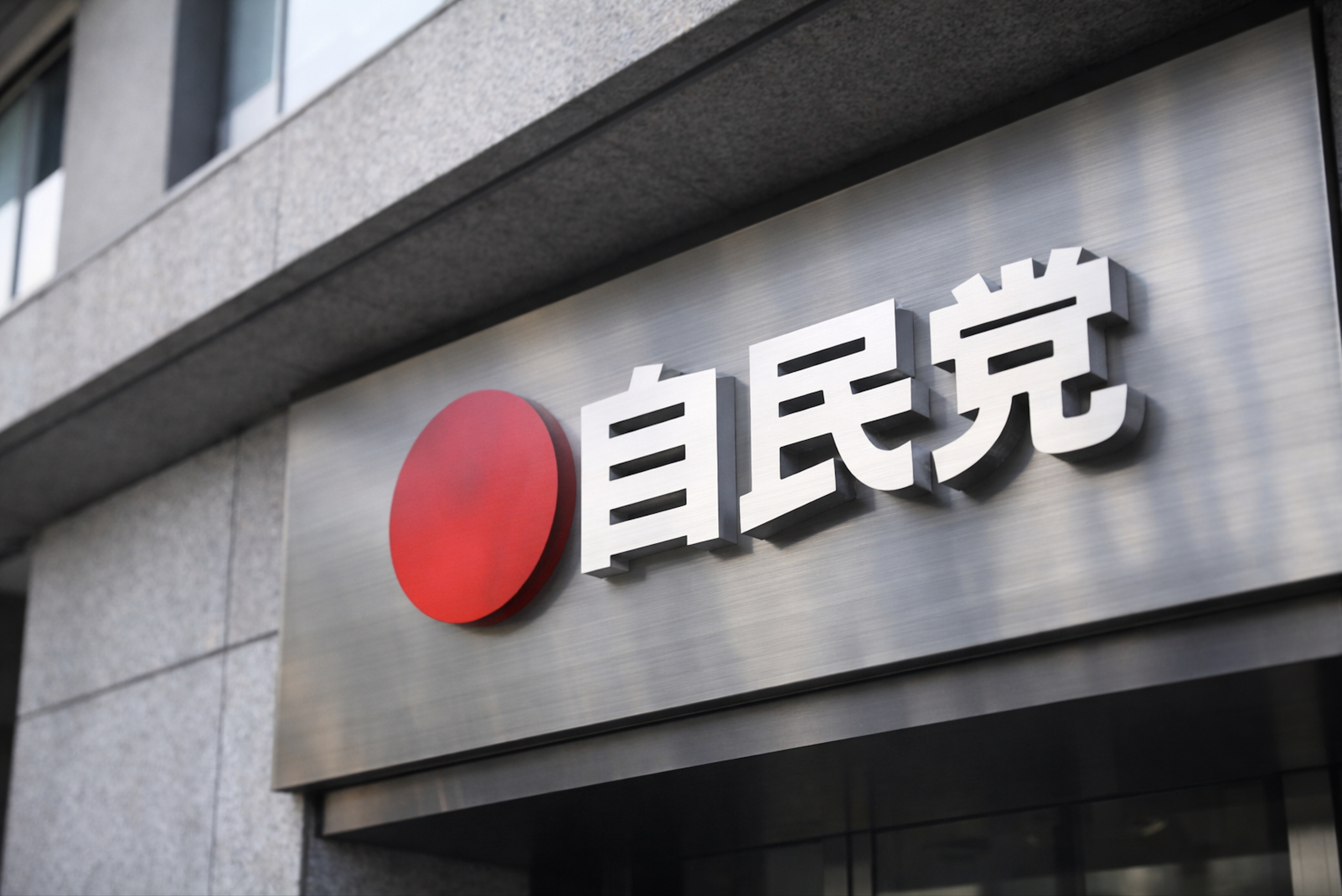
The LDP is regionally organized in branches across all municipal levels from prefectures to villages.
Local branches coordinate and support candidates in elections in exchange for Diet members’ advocacy for their regions.
Political funding regulations are less strict for branches than for parliamentarians, creating situations some criticize as loopholes.
A recent scandal brought this issue to attention when PM Takaichi handed out gift catalogs to LDP lawmakers through the local branch she heads.
In an event that brought about a sense of déjà vu, Prime Minister Sanae Takaichi found herself under fire for handing out gift catalogs to Liberal Democratic Party (LDP) lawmakers elected in the February 8 general election. The move came as a surprise because Takaichi’s predecessor Shigeru Ishiba was widely condemned for a similar gaffe after the previous Lower House election. When comparing the two donations, while Ishiba's gifts were more generous per person, Takaichi's distribution was far broader in scope: ¥30,000 each to 315 parliamentarians, totaling ¥9.45 million.
Takaichi dismissed concerns about the legality of the handout, pointing out the expense was covered by the LDP’s Nara 2nd district branch. However, since the PM is the head of that party branch, the scandal has shone the spotlight into the LDP’s regional branches and their representatives, and how much influence they have in the national party machinery.
Let’s take a look at the regional structure of the LDP and how influential its branches are in shaping national politics.
How is the LDP organized at the regional level?
What types of branches are there?
The LDP has a comprehensive structure comprising a network of regional branches overseeing the party’s activities at every local level, plus sector-specific branches focused on industrial interests.
Municipalities: City, ward, town and village branches, with one branch for each municipality. In designated cities, each ward has its own branch.
Electoral districts:
House of Representatives: A branch in each single-seat electoral district held by a Lower House member (e.g.one of these is the Nara 2nd district branch headed by PM Takaichi).
House of Councillors: A branch in each prefecture where Upper House members and candidates have their base of operations.
Proportional representation (PR) districts:
House of Representatives: Branches in prefectures where Lower House members elected from PR lists (without double candidacy in single-seat districts) and candidates have their base of operations.
House of Councillors: Branches in prefectures where Upper House members elected from PR lists and candidates have their base of operations.
Local electoral districts: Branches that can be established to cover the districts of local assembly members or heads of local governments.
Industries: A branch for each particular industry determined to be of interest.
In addition, there is a prefectural federation in each prefecture to coordinate all party branches within its territory.
What’s the relationship between local branches and Diet members?
In principle, the LDP’s regional branches exist to support local candidates in general elections. Once these candidates become Diet members, the branches in their region are meant to keep parliamentarians informed about the needs of their constituents. This sort of symbiotic relationship is a feature of the LDP’s vote-generating machine, drumming up support for politicians in exchange for lawmakers’ advocacy for local areas.
The prefectural federations in particular act as a bridge between local branches and the central government when the LDP is in power. During election campaigns, federation executives hold significant influence in coordinating candidates, playing a decisive part in deciding who gets to run and in which area, ultimately influencing who becomes a Diet member.
A more controversial aspect of local branches is their funding activity, particularly as receivers of donations for candidates and Diet members.
What’s the controversy regarding party branch funding about?
Criticism has been leveled at local party branches due to the looser regulations that govern their political funding activities, compared to the stricter rules that apply to Diet members.
In general, individual politicians face stricter disclosure and funding rules than political parties and their local branches. Furthermore, under Japan’s Political Funds Control Act, political groups affiliated with Diet members must submit records of donations exceeding 50,000 yen and spending exceeding 10,000 yen. Branches represented by Diet members are also subject to disclosure requirements; this is probably why the gift expense by the Nara 2nd district branch headed by PM Takaichi came to light so quickly.
When it comes to donations, politicians are generally forbidden from directly receiving them, but local branches can receive donations from companies and organizations. The structure of these branches is set up in a way that it allows them to funnel substantial donations to the Diet members that represent them.
When the recent scandal broke, PM Takaichi said that she understood a donation from a party branch to individual lawmakers did not violate any laws. However, when answering opposition demands for an explanation, she answered: “I donated the gifts to express my appreciation for their hard-fought election victories and to support their future work as lawmakers.” Critics noted that her response appeared to blur the distinction between herself and the branch she heads as one entity.
This situation has been criticized as a loophole and a major cause of political funding scandals. For example, opposition firebrand Renho has called for more transparency about the political activities carried by regional branches, saying there’s very little disclosure concerning activities that can involve hundreds of millions of yen. Claiming that local branches have escaped reforms meant to address the issue of money in politics, she has joined the voices calling for the law to impose Diet member-level strictness on party branch expenditures.
Conclusion
While regional branches can be an important resource to keep Diet members aware of the needs of their constituents, the supremacy of Nagatacho still puts local branches in a subordinate position under the central government. Looser regulations concerning political funding can result in scandals such as the recent gift to LDP lawmakers by PM Takaichi, raising questions about whether local branches can be used to circumvent regulations and distribute money to national politicians.
Even if such activities are not illegal, they erode trust in the political system, so the voices calling for reform are growing louder. Regular scandals might eventually bring about tighter rules to close existing loopholes, changing the landscape of political funding, and by extension lobbying, in Japan.
If you found this overview useful and want more regular insights into Japan’s politics and public policy, sign up to our mailing list and stay ahead of the developments shaping Japan’s future.
Frequently Asked Questions (FAQ)
Q: How do LDP regional branches compare to similar structures in other Japanese political parties?
A: The LDP’s regional branch network is more deeply institutionalized than that of most opposition parties, giving it an organizational advantage that has helped sustain its dominance over much of the postwar era. Opposition parties such as the Constitutional Democratic Party have built local organizations of their own, but they generally lack the LDP’s long-established local support networks and entrenched ties to key organized interests. For more information on this, read our article “What is the Liberal Democratic Party (LDP) and Why Has It Dominated Japanese Politics?”
Q: What precedent exists for tightening political funding rules on party branches?
A: Japan has repeatedly tightened political funding rules after major scandals, most notably following the Recruit scandal in the late 1980s and the Sagawa Kyubin scandal in the early 1990s. Those scandals helped drive the 1994 political reforms, which revised the rules on political money and expanded the role of party-centered funding. More recently, the LDP slush-fund scandal has triggered another round of legal reforms and transparency debates.
Q: What is the legal distinction between a Diet member personally distributing money and a branch they head doing so?
A: The key distinction is that Japan’s rules treat individual politicians and party organizations differently. Direct donations to individual politicians are more tightly restricted, while political parties and their branches can receive and spend money under a different set of rules under the Political Funds Control Act. That distinction is one reason party branches have often been seen as a less restrictive channel for political funding.
Q: Could the Takaichi gift scandal have legal consequences, or is it purely political?
A: Based on the reporting so far, the issue appears to be more politically damaging than legally unsettled. Takaichi has repeatedly argued that the gifts did not violate the law, and expert commentary in Japanese media has generally suggested that the catalog gifts do not clearly fall within the category of prohibited direct monetary or securities-based donations. Public opinion, however, has been negative enough to make the matter a political liability: one March 2026 poll found 45.7% of respondents viewed the matter as a problem, compared with 36.5% who did not.