
What is Japan’s Nuclear Power Policy? A History.
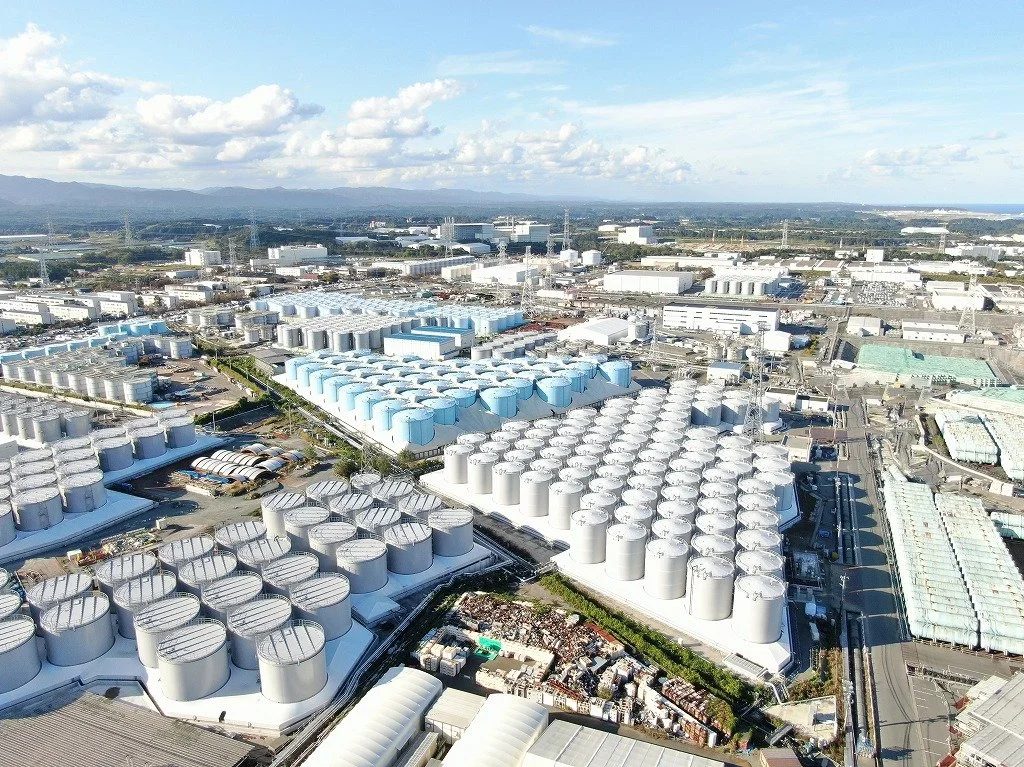
Aerial view of the Fukushima Daiichi Nuclear Power Plant, 2021. The hundreds of storage tanks visible across the site hold treated water accumulated during the decade-long decommissioning process, a physical reminder of the scale and duration of the 2011 disaster's legacy.
Key takeaways
From the 1960s onward, resource-poor Japan enthusiastically embraced nuclear power to fuel the postwar economic miracle.
The government designated the industry as a national priority and supported its development.
After the 2011 Fukushima accident, public sentiment turned against atomic energy, but in recent years the government has been restarting idle plants in order to improve Japan’s energy security.
Prime Minister Takaichi’s decisive election victory signals increased commitment to nuclear power in Japan.
As a resource-poor country that imports the vast majority of its energy needs, Japan’s initial enthusiasm for nuclear power should surprise nobody. The country entered the atomic energy club with its first commercial reactor in 1966. The government went on to designate the industry a national strategic priority in 1973, with dozens of reactors built in the decades that followed. This all came to a screeching halt after the 2011 Fukushima nuclear accident.
Up until the disaster, Japan generated around 30% of electricity from its nuclear plants, a share that at the time was expected to increase to at least 40% by 2017 and 50% by 2030. That aim is now a modest 20% by 2040. As the Fukushima specter slowly fades from the public consciousness, 15 reactors have been restarted and 10 more are currently waiting for restart approval.
With the pro-nuclear Liberal Democratic Party (LDP) now enjoying a supermajority in the House of Representatives, efforts to reenergize the industry are likely to intensify. Now it’s a good time to take a look back at how the nation’s nuclear energy policy has evolved over the years.
How has Japan’s nuclear energy policy changed?
Strategic development phase: Enthusiastic adoption
Japan’s first policy step into the nuclear power age was the passage of the Atomic Energy Basic Law in 1955. With the Hiroshima and Nagasaki bombings just a decade prior still fresh in the nation’s memory, the law limited the use of nuclear technology to peaceful purposes. In particular, the bill promoted four principles as the basis of nuclear research:
Democratic methods
Independent management
Transparency commitment
International cooperation
In 1956, the Atomic Energy Commission (JAEC) was created to promote the development of nuclear power, together with the Nuclear Safety Commission (NSC) and Japan Atomic Energy Research Institute (JAERI), among other satellite organizations.
The 1970s saw a flurry of development that cemented Japan as a nuclear energy player. Initially, Japanese electric utilities acquired reactor designs from American companies and built them in cooperation with Japanese manufacturers, who then obtained licenses to build nuclear plants in Japan. This led to domestic companies such as Mitsubishi Heavy Industries (MHI) to develop the expertise needed to design and build reactors by themselves. By the end of the decade, Japan had established a thriving domestic nuclear power production industry.
Government support phase: All in on nuclear
Japan’s modern energy policy aimed to address concerns about energy security, particularly dependence on imports. Concerning nuclear power, policy established the following principles:
Atomic energy as a major contributor to national electric output.
Domestic reprocessing of uranium and plutonium from used fuel.
Development of more efficient reactors.
Promotion to the public, emphasising safety and non-proliferation.
One more principle would eventually gain traction: environmentalism. In 2002, the government announced that nuclear energy was key in achieving carbon emission reduction goals set by the Kyoto Protocol. In the same year, a new Energy Policy Law signaled further distancing from fossil fuels, and the Ministry of Economy, Trade and Industry (METI) reduced its power-source development tax (which applied to nuclear generation).
In 2005, the Atomic Energy Commission said it was aiming for a 30~40% share of nuclear power in the country’s energy mix after 2030, aided by the introduction of advanced reactor types. The following year, the ruling LDP designated state-of-the-art reactors as a “basic national technology” and called for increased investment. In 2007, the government selected MHI and the main private actor to develop a new generation of reactors.
Post-Fukushima phase: Public opposition
Following the March 2011 Fukushima nuclear accident public sentiment in Japan shifted, with widespread protests calling for nuclear power to be abandoned. In July, the ruling Democratic Party of Japan (DPJ) set up the Energy and Environment Council (EEC) to advise the government on the makeup of Japan’s future energy mix. The council released its Innovative Energy and Environment Strategy a year later, recommending a phase-out of nuclear power by 2040 and promising a “green energy policy framework” focused on imported liquefied natural gas and coal, plus increased use of renewables.
The Japan Business Federation (Keidanren) and the LDP leadership decried the nuclear phase-out policy as irresponsible, warning of economic headwinds and high electricity bills. The DPJ quickly walked back the proposals and announced that a new Basic Energy Plan would be put together after further deliberation, particularly with municipalities hosting nuclear plants. However, the LDP retook control of government in a landslide in 2012 and promptly abolished the EEC, handing over the formulation of energy plans to METI.
The decisive election win gave Prime Minister Shinzo Abe confidence in pursuing the restart of idle nuclear plants despite persisting public misgivings. Not everyone in the LDP agreed with the policy u-turn, with former Prime Minister Junichiro Koizumi being a notable opponent to this day. Even so, the new government said it would allow reactor restarts after the Nuclear Regulation Authority (NRA) issued new safety standards and confirmed their safety. Uncompleted construction of new plants also resumed.
In the following years, the government slowly returned to the pro-nuclear stance of the pre-Fukushima days. In 2022, former Prime Minister Fumio Kishida said that Japan should build advanced reactors and extend operating licenses beyond 60 years, while expediting the restart of idle plants. However, the chairman of the NRA later poured cold water over speeding up restarts, due to the challenge of “proving something extremely difficult: that their facilities are able to bear the forces of nature.”
METI’s 7th Strategic Energy Plan, approved by the Cabinet in early 2025, lays out a nuclear target of around 20% of the energy mix for 2040. Most notably, the latest plan removes the phrase “reducing nuclear dependency as much as possible” that had appeared in previous editions since the Fukushima accident. The plan also permits the construction of new reactors for the first time since 2011, with a specific focus on supporting the development of next-generation advanced reactors.
Current phase: Takaichi nuclear whirlwind?
After the LDP’s decisive win in the 2026 general election, longtime nuclear advocate Prime Minister Sanae Takaichi can pursue her energy vision with decisiveness. Nuclear power is a major focus of her policy, which calls for the continued restart of the nation’s idle plants with the goal of making Japan energy self-sufficient. As electricity consumption grows, the PM argues atomic energy is necessary to feed increasingly power-hungry infrastructure such as data centers and semiconductor fabs.
Takaichi is also looking towards the future, advocating for nuclear fusion as a possible energy source with enormous potential. While the technology remains commercially unviable, her administration has signaled commitment to its research and development.
Conclusion
Japan looks set to reembrace nuclear power as Prime Minister Takaichi emphasizes realism and self-sufficiency in her energy policy. Her government is shifting priority from renewable sources to nuclear in order to secure a stable domestic supply. This is also tied to her geopolitical vision of a more independent Japan, less vulnerable to energy imports and an unraveling global order.
Public distrust remains a thorny issue, but a majority now supports restarting idle reactors, paving the way for the recovery of nuclear power in Japan. However, another accident like Fukushima or even continued missteps like Tohoku Electric Power’s testing of antiterror equipment at their Higashidori plant and the falsified earthquake risk data fraud committed by Chubu Electric regarding their Hamaoka reactor, would undo any public goodwill and likely end the industry in the country. This is the tightrope Takaichi’s administration must walk in their quest for energy independence.
If you found this overview useful and want more regular insights into Japan’s politics and public policy, sign up to our mailing list and stay ahead of the developments shaping Japan’s future.
Frequently Asked Questions (FAQ)
Q: When did Japan first use commercial nuclear power?
A: Japan's first commercial nuclear reactor came online in 1966. The government designated nuclear energy a national strategic priority in 1973, and the industry expanded steadily through the following decades.
Q: What happened to Japan's nuclear plants after Fukushima?
A: Following the March 2011 accident, all of Japan's nuclear reactors were eventually taken offline for safety reviews. As of early 2025, 14 have been restarted and 10 more are awaiting regulatory approval.
Q: What is Japan's current nuclear energy target?
A: METI's 7th Strategic Energy Plan, approved in early 2025, targets nuclear power supplying approximately 20% of Japan's electricity mix by 2040.
Q: Who regulates nuclear safety in Japan?
A: The Nuclear Regulation Authority (NRA), an independent agency established after Fukushima, is responsible for setting and enforcing nuclear safety standards. Restarts require NRA certification.
Photo Credits
Aerial photo of Fukushima Daiichi Nuclear Power Plant 2021
By 資源エネルギー庁ウェブサイト, CC BY 4.0, https://commons.wikimedia.org/w/index.php?curid=136393132