
How Do Japan’s Lower House Elections Work? A Guide.
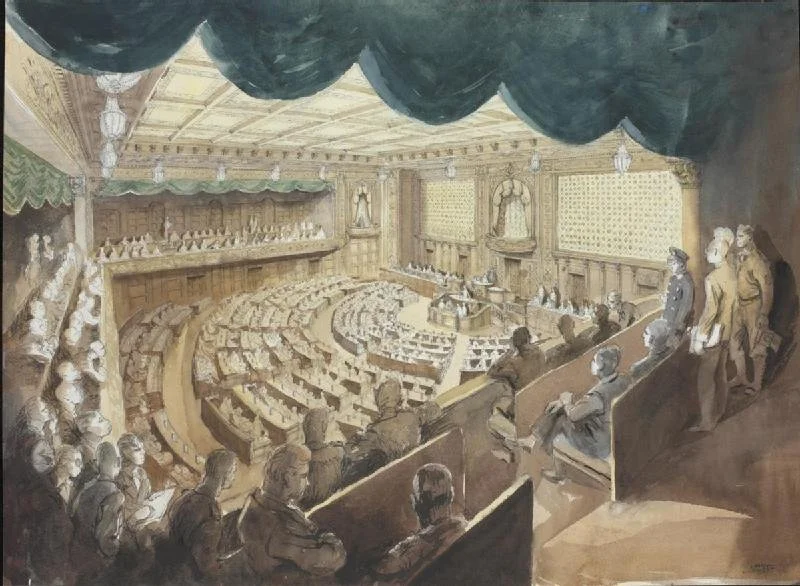
Historic image of the Japanese Diet’s House of Representatives chamber, viewed from the gallery .
Key takeaways
Lower House elections are triggered when the Prime Minister dissolves the house or when members’ term expires. However, dissolution has become the norm.
Japanese citizens aged 18 and older can vote, and those aged 25 and over can run for a seat.
The Lower House uses a mixed system of single-seat districts (289 seats) and proportional representation (176 seats) for a total of 465 seats.
The 2026 election will have the shortest campaign period in postwar history and it’s the first February election in 35 years.
Prime Minister Sanae Takaichi dissolved the House of Representatives and called a snap election on February 8. Her gamble clearly paid off, as she has emerged victorious with the LDP maintaining a robust supermajority in the Lower House.
Much ink has already been spilled on why and how Takaichi was able to reverse the LDP’s downward trend, coupled with the botched Frankenstein amalgamation of the CDP and Komeito as the Centrist Reform Alliance, or CRA. However, this momentous 2026 general election offers the opportunity to take a deep dive into how such races work and to better understand the dynamics at play behind the vote to control Japan’s all-important Lower House.
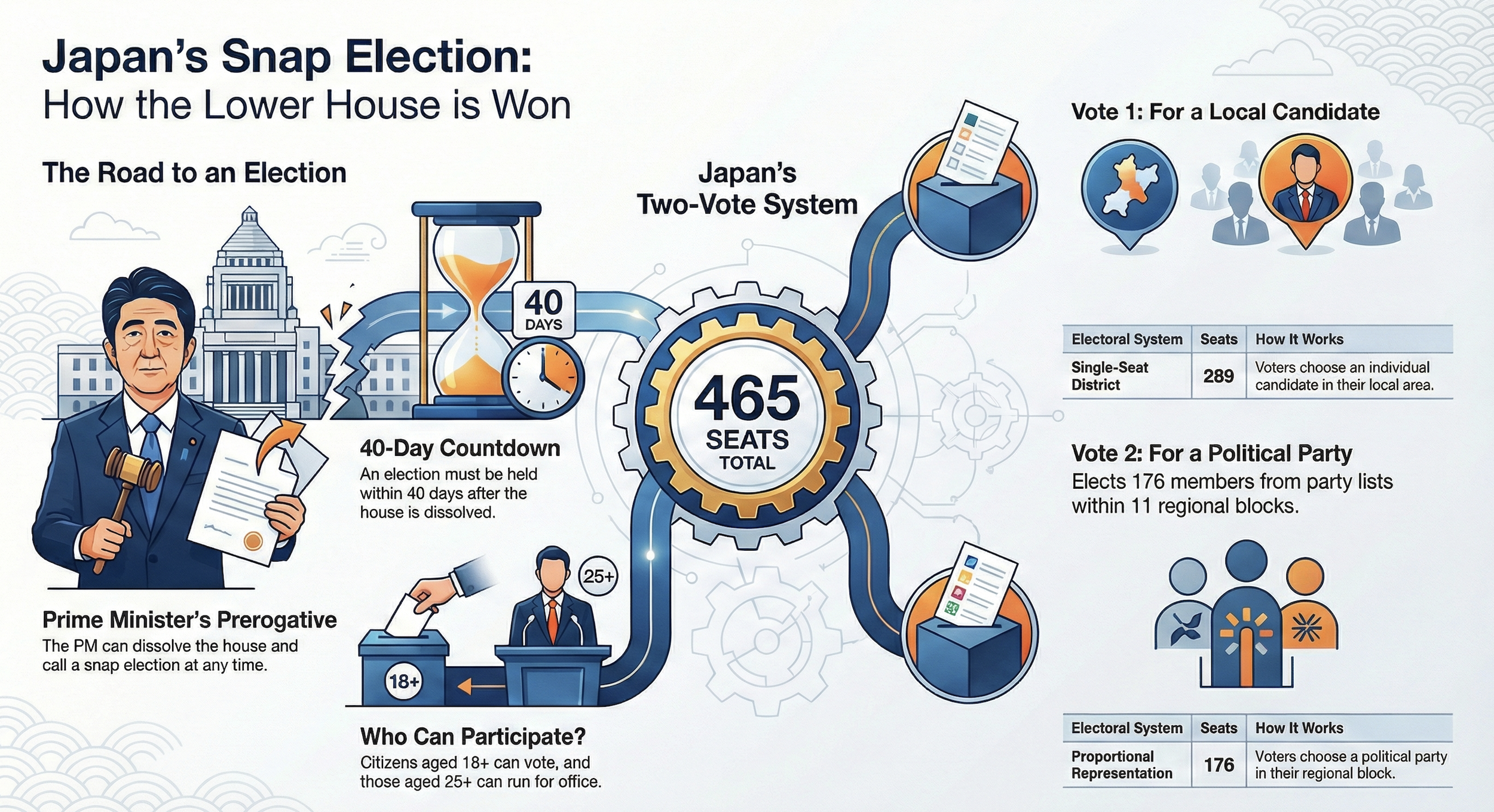
Japan’s Lower House elections use a two-vote system and elect 465 members via single-seat districts and proportional representation
How is the Lower House dissolved?
The first step towards a House of Representatives election is almost always the dissolution of the chamber, which is the sole prerogative of the Prime Minister. While an election becomes necessary when the members’ 4-year term of office expires, in practice this has only happened once under the current Constitution, in the 1976 general election. Every other time the election has been triggered by the dissolution of the house, which has become the norm.
The Prime Minister’s power to dissolve the Lower House at their discretion has been used by politically savvy leaders to their advantage, most notably in recent years by Junichiro Koizumi and Shinzo Abe. However, the boon can prove a curse, as Takaichi’s predecessor Shigeru Ishiba found out with his ill-timed 2024 move that cost the ruling coalition its majority. There have been calls to limit the Prime Minister’s power of dissolution, but no concrete steps have followed.
What is the timing for the elections?
Under the Constitution, a general election following the dissolution of the House of Representatives must be held within 40 days from the date of dissolution. In addition, the Public Office Election Act stipulates that the date for a general election must be announced at least 12 days in advance.
When a general election is held due to the dissolution of the house, the Diet must be convened within 30 days of the election date. The Diet session convened after such an election is called a special session.
For the 2026 election, candidates only had 12 days to campaign before election day, the shortest in postwar history. It’s also the first snap election to take place in February since 1990. Since budget deliberation happens during this time, passage of the national budget is likely to be delayed.
Who administers the elections?
In principle, prefectural election administration committees administer the elections for members elected from single-seat constituencies within their jurisdiction, and the Central Election Management Committee administers the elections for members elected by proportional representation.
The House of Representatives Electoral District Delimitation Council is part of the Cabinet Office and investigates and deliberates on revisions to the electoral districts under the Lower House single-seat constituency system. When it deems it necessary, it prepares a revision proposal and recommends it to the Prime Minister.
For each Lower House election, administrative expenses of around ¥70 billion are allocated in the national budget. For the 2026 election, the cost is expected to be in the ¥85 billion range.
Who is eligible to vote and run?
Japanese citizens aged 18 or older have the right to vote. The revised Public Office Election Act was enacted in June 2015 and lowered the voting age from 20 to 18 years old starting in June 2016.
On the other hand, Japanese nationals aged 25 or older have the right to be elected as members of the House of Representatives.
How is the mixed-member system structured?
The Lower House employs a mixed-member system with a total of 465 seats. This system simultaneously maintains two parallel electoral processes: a single-member district system with 289 districts and an equal number of seats, and a proportional representation system with 11 districts and 176 seats. These districts are always exactly duplicated, with single-member districts corresponding to proportional representation districts.
In single-member districts, one candidate with the highest number of votes is elected from each electoral district. However, the candidate must receive at least one-sixth of the total valid votes cast (called the “statutory vote threshold”). Since this single-seat constituency system elects one representative per district, all prefectures are divided into 289 electoral districts according to the fixed number of seats. Voters cast their ballots by handwriting the name of one candidate on the ballot paper.
In proportional representation districts, the national constituency is divided into 11 electoral districts based on prefectures and regions, often referred to as “blocks.” The number of seats won by each party is determined by proportionally allocating seats according to the number of votes received by each group, using the D’Hondt method (a mathematical formula that averages votes to allocate seats proportionally). Double candidacy in both a single-seat constituency and a proportional representation constituency is permitted, provided the constituencies overlap. This system also includes the controversial "zombie lawmaker" provision, which allows candidates who lose their single-seat district to potentially still win a seat via the proportional list.
For a detailed breakdown of the 11 regional blocks, the "zombie" provision, and recent debates on seat reduction, read our deep dive: What is Japan’s Proportional Representation System?
Conclusion
The recent general election is momentous due to several unique circumstances. Besides the short campaign period and the unusual timing, this was the first time voters were able to deliver a verdict on Prime Minister Takaichi. She was able to pass the test with flying colors, with a historic victory that allows Takaichi to fully implement her ambitious mandate.
Meanwhile, the opposition parties are left out in the cold. Takaichi ate the lunch of other right wing parties, and the centrists and leftist parties were absolutely decimated. A few parties managed to hold the line, or even increase their seat share (e.g. Team Mirai and Sanseito), but these are marginal changes in the wake of this massive LDP onslaught. How these parties seek to find relevance within a supermajority LDP Lower House remains to be seen, but rebuilding and reformatting these parties to adapt to Japan’s new political paradigm must be top of mind for a wide range of opposition parties.
For now, one thing is for certain: Japan’s political landscape has been fundamentally redrawn, and it is Takaichi who is holding the pen.
If you found this overview useful and want more regular insights into Japan’s politics and public policy, sign up to our mailing list and stay ahead of the developments shaping Japan’s future.
Frequently Asked Questions (FAQ)
Q: Can non-Japanese residents vote in Lower House elections?
A: No. Only Japanese citizens aged 18 and older are eligible to vote in national elections.
Q: How often are Lower House elections held?
A: Technically every four years, but because the Prime Minister usually dissolves the house early, the average gap between elections is roughly two and a half to three years.
Q: What is the difference between Lower House and Upper House elections?
A: The Lower House (House of Representatives) can be dissolved at any time and has a shorter term (4 years), making it more responsive to public opinion. The Upper House (House of Councillors) has fixed 6-year terms with half the seats contested every three years, providing more stability.
Photo Credits
The Imperial Japanese Diet, Tokyo - the House of Representatives
By Morris, James - http://media.iwm.org.uk/iwm/mediaLib//148/media-148156/large.jpgThis photograph Art.IWM ART LD 5841 comes from the collections of the Imperial War Museums., Public Domain, https://commons.wikimedia.org/w/index.php?curid=25288831